
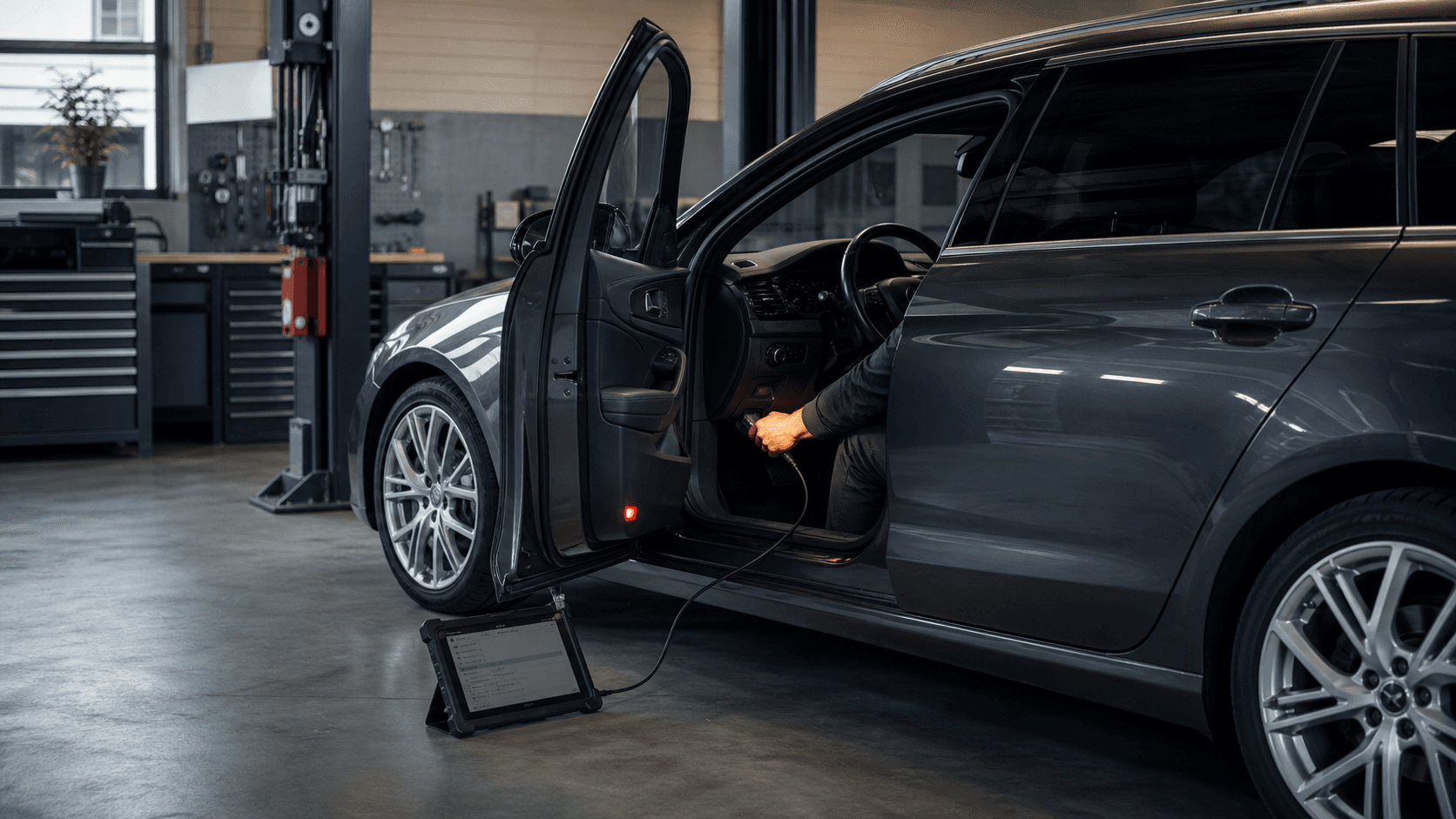
A car connected to computer diagnostics in a repair workshop

AI-powered car repair assistance platform

AI car diagnosis

Using a VIN, OBD-II code or symptom description, understand the likely causes, how urgently the car needs attention and what to check next.

  • VIN, OBD-II or symptoms
  • Step-by-step inspection plan
  • Technical sources in the report
Cardiag.AI

Get a preliminary analysis

Enter what you already know: a VIN, OBD-II code or detailed symptom description.

Examples:

Do not enter your name, phone number or other personal data.

3interface and report languages
4brand ecosystems in the first release
RAGtechnical knowledge retrieval
VINsource applicability check

Sample diagnostic report

More than a code definition: an inspection sequence

The report shows urgency, likely causes, next checks and technical sources. Conclusions are refined using the VIN and input details.

Sample diagnostic report

Audi A4 B9 · 2018 · 2.0 TFSI · EU

P0171, rough idle after warm-up

Inspection neededPostpone a long trip until intake leaks and fuel trims have been checked.
01

Summary

The code indicates a lean condition on cylinder bank one. Combined with rough idle, the first check is for unmetered intake air, followed by the airflow sensor and fuel pressure.

02

Likely directions

1
Leak downstream of the airflow meter

Hoses, crankcase ventilation and intake seals can admit unmetered air.

2
Contaminated or inaccurate MAF

Sensor readings should be compared with calculated engine load rather than replaced by guesswork.

3
Insufficient fuel pressure

Check after the basic intake and fuel-trim inspection.

03

What to do now

  1. 1Save freeze-frame data and fuel trims
  2. 2Inspect the intake and crankcase ventilation system
  3. 3Give the code, conditions and this test plan to the technician

Example questions

Describe the problem in your own words

Add the model, year, mileage and the conditions in which the issue appears. This helps rule out irrelevant variants.

Honest coverage

Answer depth depends on available evidence

Cardiag.AI shows its coverage level. When technical evidence is thin, it asks for more data or limits the conclusion.

Full

Brand bulletins, DTC data and procedures with applicability checks.

Basic

Universal OBD-II data and a safety-conscious preliminary analysis.

Limited

Not enough verified sources for a vehicle-specific conclusion.

01

Audi / VAG

First priority: Audi; then VW, Škoda and SEAT

Full
02

BMW / MINI

Shared procedure and code ecosystem

Full
03

Mercedes-Benz

European-market passenger cars

Full
04

Toyota

Toyota EU; Lexus after separate verification

Full

How it works

From problem description to inspection plan

Three steps: identify the vehicle, retrieve applicable technical material and build an ordered inspection sequence.

01

Describe the car and the issue

VIN, model, year, mileage and the conditions in which symptoms appear help narrow the search.

02

Cardiag.AI checks the technical knowledge base

RAG selects service bulletins, procedures, DTC definitions and verified data.

03

Get an action plan

The report separates urgency, likely causes, next checks and sources.

Inside the report

Answers you need before the workshop visit

Urgency assessment

Whether to keep driving and what cannot wait.

Likely causes

Directions ordered by inspection sequence, not an exhaustive list.

Inspection sequence

What to record yourself and what a workshop should test.

Technical sources

Documents supporting the answer and their applicability limits.

Safety

When evidence is insufficient, Cardiag.AI says so

The service should not invent an exact diagnosis, probability or permission to drive without adequate evidence.

For a red oil-pressure warning, overheating, brake loss, fuel smell or smoke, stop safely and contact emergency assistance.

Direct answers

Frequently asked questions

Do I need an OBD adapter?

No. You can enter a known code, a VIN or describe the symptoms. An adapter helps retrieve codes and live data, but it is not required to start.

Does Cardiag.AI replace a mechanic?

No. It provides preliminary diagnosis and preparation for inspection. Repairs and safety-critical decisions must be confirmed on the vehicle.

Where do the answers come from?

From the connected knowledge base: service bulletins, manufacturer procedures, DTC references and editorial data. The report shows the sources used.

Which makes are supported?

Basic analysis is available for all makes. Deep coverage is being built first for Audi/VAG, BMW/MINI, Mercedes-Benz and Toyota.

What happens when there is not enough data?

The service marks coverage as limited, asks a follow-up question or avoids a specific conclusion instead of inventing a diagnosis.

Describe the problem and get an inspection plan

A VIN, one fault code or a symptom description is enough to begin a preliminary analysis.

Start diagnosis